


The Ice Age Cometh: Winter Driving Tips for Jaguar Owners
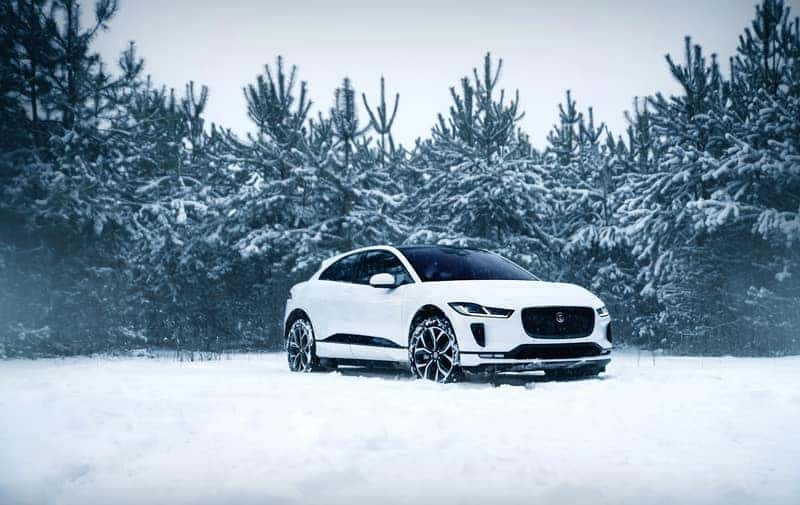
If you live in Southwest Florida, hazardous winter driving conditions are about as worrisome as the prospect of being run off the road by a herd of angry unicorns. It just doesn’t happen.
But if you reside in a snow- or ice-prone region—or regularly divide your time between Florida and say Wisconsin, Michigan, North Carolina or Upstate New York—then driving your Jaguar over slick, snowy roads is well within the realm of possibility during much of the year.
Needless-to-say, you should avoid driving in foul winter weather whenever possible. Your patience will be amply rewarded, as roads improve surprisingly fast once the weather clears and road clearing crews can finish their jobs. Your nerves will thank you too.
But if you absolutely must drive in ice or snow, here are a few safety tips to consider before leaving home:
1.) INVEST IN JAGUAR-APPROVED WINTER TIRES.
Your tires are your car’s only connection to the road. And just as you would never dream of hiking down a snowy road wearing just flip-flops or sandals, your Jaguar should also be suitably shod against slippery road surfaces. With Jaguar-approved winter tires, of course.
When the temperature drops below 45 degrees Fahrenheit, the natural rubber compound on these winter tires remains malleable, helping to greatly increase the tire’s grip. They also have large numbers of tiny lateral grooves—called “sipes”—to grip the road by clawing into snow and ice and dispersing water more rapidly. Winter tires have an average of 1,500 sipes, compared with just 200 on a typical summer tire
Installing only two winter tires is never recommended. In fact, such a practice could prove dangerous. Having winter tires only in the rear of a rear-wheel drive vehicle means you should be able to accelerate with no problem. But the car’s steering and stopping abilities will be greatly diminished. On icy or snowy roads, it is these abilities that will ultimately keep you safe. Thus, you should always maximize their effectiveness by using four winter tires.
2.) CHECK YOUR BATTERY, FLUIDS & HEADLIGHTS
A battery that is slow to turn over on a warm day probably won’t turn over at all once the mercury plunges. Hence you should make it a standard practice to have your battery checked and fluids topped-off each year at the first sign of cold weather. Or, indeed, when you changeover to your winter tires.
Moreover, as the cold weather months coincide with the year’s shortest days and longest nights, be sure to have your headlights checked at the same time. Whenever it snows, be sure to clean the snow off each head- and tail-light as surely as you clear the windshield.
Another best practice to observe during the cold months is to always maintain at least a half tank of gas. This will help prevent a fuel tank freeze-up; and provide enough fuel reserve to continue operating the vehicle’s heater should you become stuck in snow.
Caution:
NEVER warm up your vehicle in an enclosed area, such as a garage. Additionally, NEVER run your car’s engine if its exhaust pipe is clogged by snow, ice, or mud; or not clearly visible. A damaged, blocked or otherwise compromised exhaust pipe can cause dangerous, life-threatening fumes to potentially back-up into the vehicle’s passenger compartment.
3.) YOUR JAGUAR’S INCONTROL® FEATURE
Should your Jaguar ever become stuck in snow you can take great comfort in knowing you are neither stranded nor alone.
If your Jaguar is a 2016 model or later, it has access to InControl®, an exclusive suite of services and applications that connects you to your Jaguar and links you seamlessly and securely with the outside world—via your smartphone.
In other words, no matter when or where you may need it, help is on the way.
Jaguar’s InControl® technologies include standard and optional driving assistance features to help keep you safe while making the most of your Jaguar driving experience. Among its many features, InControl® navigates accurately, keeps you connected and entertained, calls for roadside assistance if needed; and much more.
4.) THE AMERICAN AUTOMOBILE ASSOCIATION (AAA) OFFERS THESE ADDITIONAL WINTER DRIVING TIPS:
- Drive slowly. Always allow extra time to get where you are going; then adjust your speed downward to account for lower traction when driving on snow or ice.
- Accelerate and decelerate slowly. Apply the gas slowly to regain traction and avoid skids. Do not try to get moving again in a hurry; and take time to slow down for an approaching stoplight. Remember: It takes longer to slow down on icy roads.
- Increase your following distanceto five to six seconds. This increased margin of safety will provide the longer distance needed if you have to stop.
- Know your brakes. Whether you have antilock brakes or not, keep the heel of your foot on the floor and use the ball of your foot to apply firm, steady pressure on the brake pedal.
- Do not stop if you can avoid it. There is a big difference in the amount of inertia it takes to start moving again from a full stop versus how much it takes to get moving while still rolling. If you can slow down enough to keep rolling until a traffic light changes, do it.
- Do not power up hills. Applying extra gas on snow-covered roads will just make your wheels spin. Try to get a little inertia going before you reach the hill and let that inertia carry you to the top. As you reach the crest of the hill, reduce your speed and proceed downhill slowly.
- Do not stop going up a hill. There is nothing worse than trying to get moving up a hill on an icy road. Get some inertia going on a flat roadway before you take on the hill.
- Do not use cruise control when driving on any slippery surface, such as on ice and snow.
- On longer trips travelling through ice and snow, keep a bundle of cold-weather gear in your vehicle, such as extra food and water, warm clothing, a flashlight, a glass scraper, blankets, medications, and more.
If you get lost or stuck:
- Stay with your vehicle: Your vehicle provides a temporary dry shelter and makes it easier for rescuers to locate you.
- Do not attempt to walk in a severe storm. It is easy to lose sight of your vehicle in blowing snow and become lost. Plus, other vehicles may not see you.
- Do not overexert yourself:When digging out your vehicle, listen to your body and stop if you become tired, experience shortness of breath and/or suffer chest pain.
- Be Visible:Tie a brightly colored cloth to the antenna of your vehicle or place a cloth at the top of a rolled-up window to signal distress. At night, keep the dome light on if possible as it only uses a small amount of electricity and will make it easier for rescuers to see you.
As always, Wilde Jaguar Sarasota is here to help make your driving experience more fun, safe and rewarding.
If you are planning to drive (or ship) your Jaguar north to somewhere cold and snowy, contact us for an appointment to prepare it for all that Mother Nature may have in store.
0 comment(s) so far on The Ice Age Cometh: Winter Driving Tips for Jaguar Owners