


Jaguars History at Le Mans
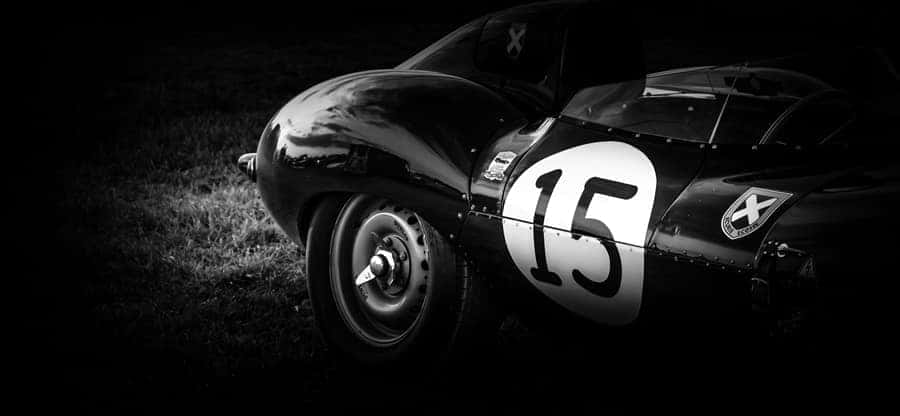
Jaguar Racing at Le Mans: Where Endurance Wins the Day
Automobile racing comes in more forms than most people realize. To American fans, the two best known are open-wheel racing—as exemplified by IndyCar racing in the Indianapolis 500—and stock car racing, as typified by NASCAR racing in the Daytona 500.
Although these two styles of racing involve different types of cars, the races themselves are somewhat similar. Each happens on a 2.5-mile oval track, with two long and two shorter straightaways, and is won by whichever car survives the hyper-aggressive, bumper-to-bumper competition by outpacing them all over a set distance of 500 miles.
Endurance Wins the Race
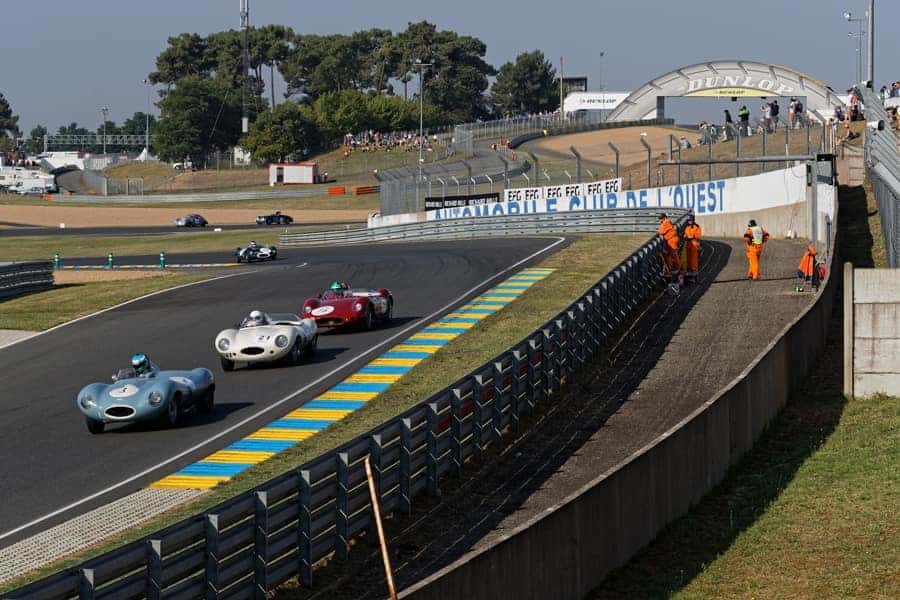
A third format—one that arguably makes more sense for everyday drivers like you and me—is endurance racing, a type of race whose signature event is held each year in Northwestern France. Officially known as the 24 Hours of Le Mans, this legendary sports car race has been an annual fixture in the City of Le Mans since 1923.
There, where public roads comprise a big chunk of the racecourse, endurance and efficiency are prized over muscle and speed. Indeed, the winner of the 24 Heures du Mans—as the race is called in its home country—is the sports car that ultimately covers the greatest distance in 24 hours without breaking down. And who among us doesn’t strive to cover the greatest distance without breaking down?
High speed and sleek design are both highly desirable features in a sports car. But endurance wins the prize at Le Mans. And the car that wins the 24 Hours of Le Mans—often considered the ultimate test of man and machine—is deemed tops in all three.
After World War II, a resurgent Jaguar wanted to put to rest some lingering misconceptions about the reliability of its cars. And what better way to accomplish this than by entering them in a grueling endurance race watched by fans the world over? Originally called the Grand Prix of Speed & Endurance, Le Mans was not only the ideal showcase for a new generation of Jaguar speedsters, but also a very convincing way to prove their dependability.
When all was said and done, Jaguar completely erased all doubts about its durability. It did this by completely dominating Le Mans throughout the post-war 50’s, a period marked by especially intense competition between the companies behind Europe’s finest and fastest new sportscars. Jaguar took first place in 1951; first, second and fourth place in 1953; first and third place in 1955; first and fourth place in 1956; and the top four places in 1957.
Never had a single country so completely swept the race as Great Britain did in 1957, Moreover, Jaguar’s success at winning the top four places (plus the sixth place) was considered even more remarkable given that each of the winning cars was privately owned, received minimal manufacturer support, and raced against custom made creations by some of the greatest sports car manufacturers in the world. The competition that year included the Ferrari 315S, Porsche 550A, Lotus Eleven, Ferrari 500TRC, Aston Martin DB3S and Maserati A6GCS.
In subsequent years, Jaguar would race less, but captured first and fourth place in the 1988 24 Hours of Le Mans, and first and second place in 1990.
Making Good on His Motto
When he started the company in the 1920’s, Jaguar founder Sir William Lyons’ motto for his sophisticated new line of automobiles was “grace, pace and space.” Little did he know that Jaguar’s multiple wins at Le Mans would put the world on notice that grace, pace and space could also win the race. Fortunately for today’s driver, the company’s victorious record in endurance racing has influenced the evolution of its newest road cars, with the accent still on endurance, speed and beauty.
The Race Continues
Speaking of evolution, with Jaguar’s 2016 entry into Formula E racing, the company revived its competitive racing program to showcase the full range of its electric race cars. Then once again used the experience to inform the engineering on all its electric vehicles.
Formula E racing—which only began in 2011 and held its first championship in 2014—involves competition between single-seat electric sports cars. This has also proven to be a winning proposition for Jaguar, with its racing team logging its first Formula E victory at the Rome E-Prix in 2019. During the current Formula E season for ’20/’21, during which COVID forced the cancellation of some events, Jaguar is currently leading in both the team and individual driver championships after two completed races.
0 comment(s) so far on Jaguars History at Le Mans